Debt Recycling: How much could you benefit?
Want to make your mortgage interest tax-deductible? Here is how the debt recycling strategy works in Australia, straight from the ATO rulebook.
Should you pay down your mortgage? Should you just buy shares? Or would debt recycling give you the most bang for your buck?
Don't guess, compare these options with the debt recycling compared calculator.
Why Bother with the Debt Recycling Strategy?
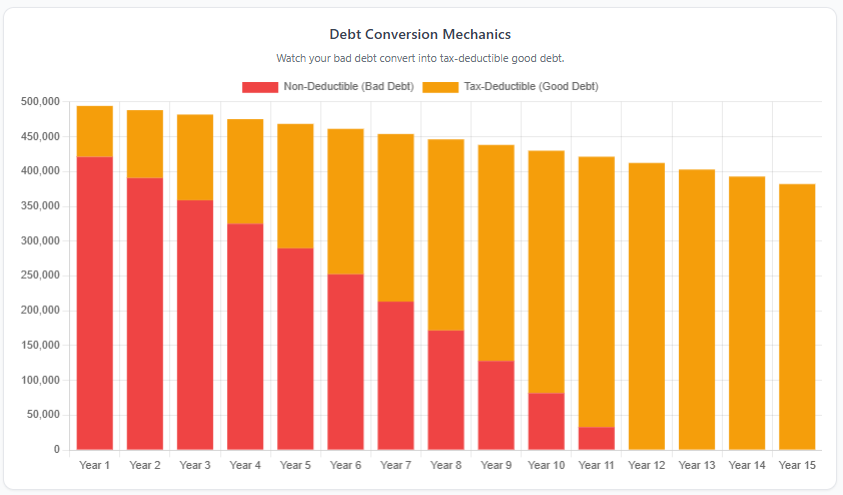
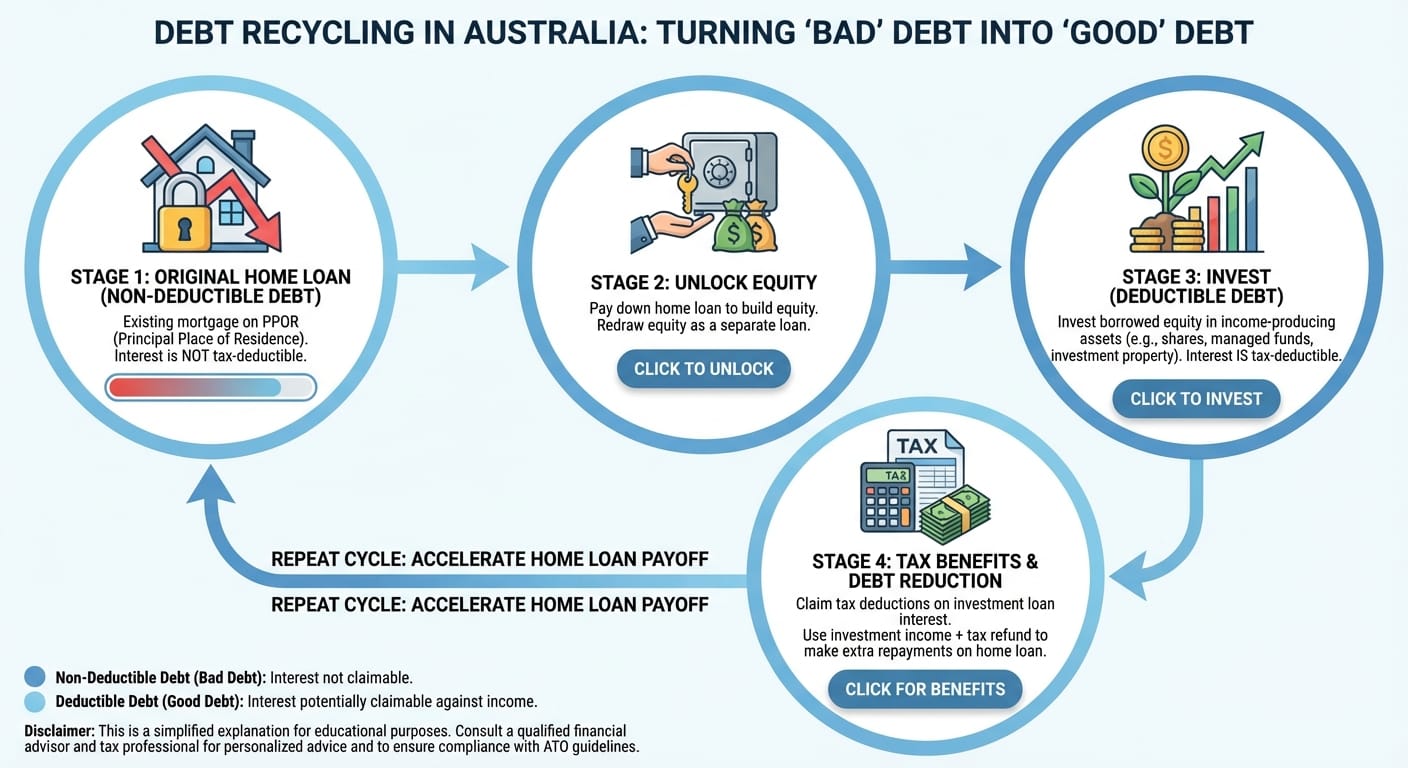
Stop paying full tax on your investments! Seriously, at its core, the debt recycling strategy is a 100% legal way to flip your debt from the “Bad” column (non-deductible home loan) to the “Good” column (tax-deductible investment loan). By restructuring your debt, you get to write off your home loan interest against your income. It’s debt restructuring 101, and it’s absolute tax gold in Australia.
The formula for your potential tax savings is simple—it’s just how much income tax you avoid paying:
Example:
6% Interest Rate × $100,000 Loan Split × 37% Marginal Tax Rate
= $2,220 Tax Saved per year!
When Does This Tax Strategy REALLY Pay Off?
Look at the formula above. The variables that juice your returns are a higher interest rate, a higher marginal tax rate (i.e. you earn more money), or a larger investment amount. Hot Tip: Don’t switch to a garbage lender with high fees just to chase a higher rate. The point is, when interest rates rise in Australia, the amount you can claim on your tax return goes up with it, softening the blow of your mortgage payments.
Got a Mortgage AND Spare Cash to Invest?
Yes. This is the exact scenario where the magic of debt recycling in Australia works. If you have non-deductible debt (your owner-occupied home loan) and you have cash waiting to be invested in income-producing assets like shares or property, you are the prime target audience. By paying down the mortgage, redrawing from a clean loan split, and buying the asset, you turn bad debt into good debt instantly.
Can I just keep my spare cash in my offset account or redraw?
Nope. Hard pass. To satisfy the ATO debt recycling rules, you must actually use the redrawn funds to buy an income-producing asset. Keeping cash in your offset account or redraw does not generate taxable income, so the ATO won’t let you claim a single cent of interest deduction. The ATO cares about the purpose and use of the borrowed funds.
What if the investment income is less than the interest cost? (A.K.A. Negative Gearing)
If your investment costs (interest) outweigh the investment income (dividends or rent), you are negatively geared. While I love a good tax deduction, negative gearing is not the same as debt recycling. Debt recycling is specifically about replacing your non-deductible mortgage debt with deductible debt, rather than just taking on extra leverage to lose money on cashflow.
So, What’s the Alternative to Debt Recycling?
You should only compare debt recycling to one alternative: taking your spare cash and investing it directly into shares while leaving your home loan untouched. Do not compare it to keeping cash in your offset account. That’s a false comparison, because cash is risk-free, while investing in the stock market carries risk. It’s apples to bananas—stop it.
When Should You Walk Away?
Forget about debt recycling if:
- You pay zero income tax (there is no tax bill to reduce).
- You don’t have a home loan (no bad debt to recycle).
- You don’t have the stomach for investing in volatile assets like shares or property.