Don't Die Owning UK Shares: The UK Inheritance Tax Non-Resident Trap
Living overseas but still holding UK shares? Watch out. The UK inheritance tax rules for non-residents mean your estate could face a surprise 40% tax bill.
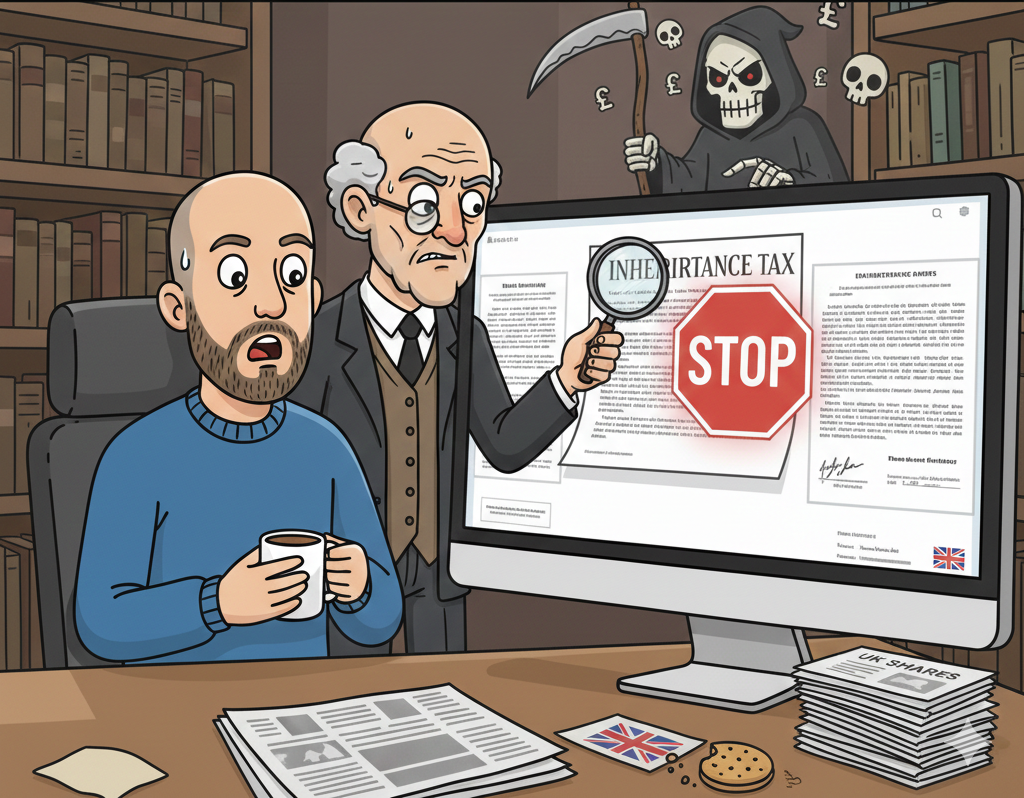
Most people think UK inheritance tax (IHT) is something you only need to worry about if:
- You live in the UK
- You own a house in the UK
- You plan to die dramatically in a top hat somewhere in Surrey
Unfortunately, the UK tax system is far more devious than that.
You can be living happily overseas—Australia, Europe, Mars—and still leave your family with a 40% UK inheritance tax rate purely because of what you own, not where you live.
Following the massive UK tax reforms (which transitioned IHT to a residence-based system), if you are a non-resident, your global assets are safe, but any UK-sited assets remain firmly inside the tax net. Let’s talk about these sneaky assets, why they matter, and how to quietly avoid this mess altogether.
What actually triggers UK inheritance tax for non-residents?
Here’s the key idea most people miss:
UK inheritance tax is based on asset location (situs), not where the owner lives, where the broker is, or your citizenship status.
So:
- Living overseas ❌ not enough
- Holding assets in a non-UK broker ❌ not enough
- Being an Australian citizen ❌ still not enough
If the asset itself is classed as a UK-sited asset, HMRC wants their pound of flesh. And that slice is a brutal 40% on anything valued above £325,000. Ouch.
What counts as a UK-sited asset?
This is where things get sneaky for expats investing in UK shares:
1. UK-domiciled funds and ETFs (the silent killer)
These are the biggest trap. If a fund or ETF is domiciled in the UK, it is a UK-sited asset—regardless of where you live, what currency it trades in, or which exchange it’s listed on. If you die holding these and you’re over the £325k nil-rate band, HMRC rubs its hands together.
2. Shares in UK companies
If the company is incorporated in the UK, the shares are UK-sited assets. This includes FTSE 100 giants and small caps alike. It doesn’t matter if your broker is Australian, the shares are held electronically, or you haven’t stepped foot in the UK for decades. UK company = UK-sited asset = subject to UK shares inheritance tax for expats.
3. UK property
Residential, commercial, buy-to-let, or the "I might move back one day" family home are all firmly inside the UK IHT net. No surprises here.
4. Cash in UK bank accounts
Yes, really. Large balances sitting in UK-based bank accounts are considered UK-sited and can be pulled into IHT calculations.
What doesn’t count as UK-sited? (Your Get Out of Jail Free Cards)
Now for the good news. There are simple ways to keep your investments safe.
1. Irish-domiciled ETFs (the MVP)
These are absolute gold for non-UK investors. Even if they trade on the London Stock Exchange, are priced in GBP, or you hold them with a UK broker, Irish-domiciled ETFs are NOT UK-sited. They are completely outside the UK inheritance tax net. This is why sensible international investors choose Irish UCITS ETFs over UK-domiciled versions.
2. US-listed shares and ETFs
From a UK perspective, HMRC has no claim here. (Note: You may have US estate tax issues instead, which is a different horror movie, but you're safe from the UK taxman here.)
3. Non-UK property
Australian property, European property, moon bases—completely outside the UK IHT net.
The “but it’s held in a UK brokerage” myth
Holding assets in popular UK platforms like Hargreaves Lansdown, Interactive Investor, or AJ Bell does not automatically make them UK-sited. The broker’s location is irrelevant. The asset domicile is what determines the situs. You can hold Irish-domiciled ETFs in a UK broker and remain completely safe from UK IHT.
How to avoid the UK inheritance tax trap (Legally and Boringly)
The fix is wonderfully simple:
- ✅ Check the ISIN and Domicile: Always look for "Domicile: Ireland" (ISIN starting with IE) on the fund factsheet.
- ❌ Avoid UK-domiciled funds: Steer clear of UK OEICs, unit trusts, and UK-domiciled ETFs.
- ✅ Restructure your holdings: If you hold UK company shares directly, consider swapping them for a global or European diversified fund domiciled in Ireland.
Taking five minutes to audit your portfolio and swap out UK-domiciled assets for Irish-domiciled alternatives can save your heirs hundreds of thousands of dollars. Be the boring, spreadsheet-loving adult today—your future family will thank you.