The Ultimate ETF Buyers Checklist (UK): How to Avoid Costly Mistakes
Before you click 'Buy' on your next ETF, make sure you run through this simple checklist. Missing just one of these factors could cost you thousands in UK tax and FX fees.
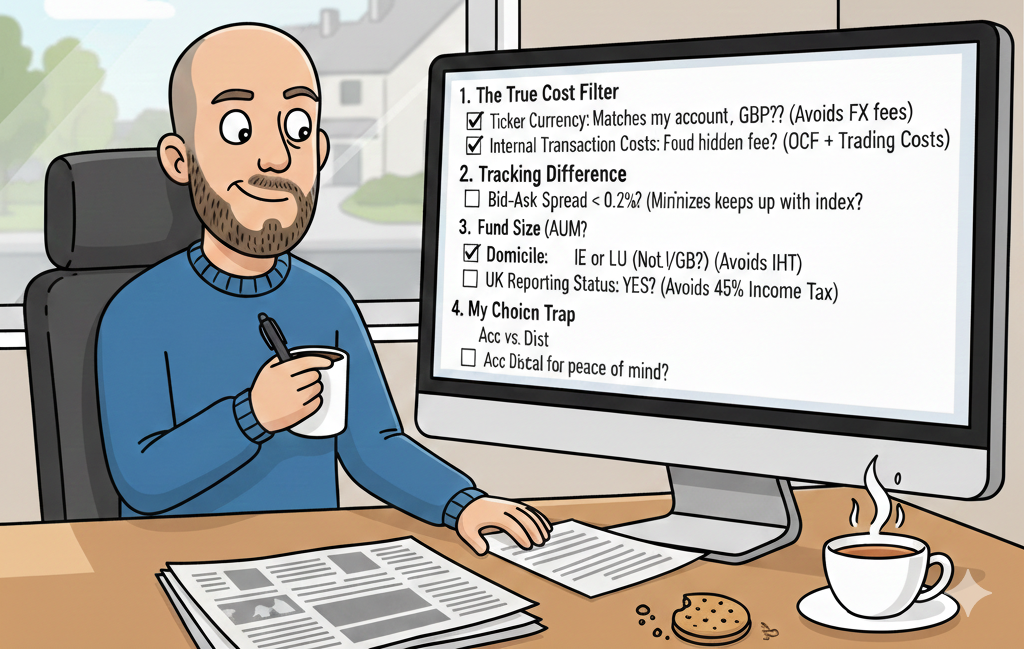
In investing, as in life, you should only worry about the variables you can control. Once you’ve selected an index, the market's performance is up to, well, the market. However, the way you buy that index is entirely up to you. If you are learning how to buy ETFs in the UK, there are a handful of nasty gotchas that can allow your broker or the taxman to feast on your hard-earned capital before you’ve even started.
To show you what I mean, let’s look at two investors, "Hasty Harry" and "Checklist Charlie." Both have £100,000 to invest in the exact same Emerging Markets fund.
The fund I’ve used for illustration purposes is the Amundi Prime Emerging Markets ETF.
The Tale of Two Trades: £100,000 Investment
The Result on Day 1
- Hasty Harry looks at his screen and sees £98,896. He has lost £1,104 before the market has even moved a single inch. He’s also sitting on a tax time bomb that could eventually cost his family 45% of his profits or 40% of his total wealth.
- Checklist Charlie looks at his screen and sees £99,796. He’s only "down" £204 (mostly just the unavoidable bid-ask spread). He sleeps soundly knowing his tax bill is minimized.
Why the "Everything Wrong" Way is so common
The reason Harry messed up isn't that he's a bad investor; it's that brokers make it easy to mess up. They’ll happily let you buy a USD ticker with a GBP account because that FX fee is pure profit for them. They won't warn you about "Reporting Status" because they aren't tax advisors.
My Personal Takeaway
The "Checklist Way" isn't about being a genius; it's about being a bit of a pedant. Before I click that "Buy" button now, I ask myself three questions:
- Is the ticker in my local currency? (Avoid the FX gut-punch).
- Is it a "Reporting Fund"? (Avoid the 45% Income Tax trap).
- Is the market fully "awake"? (Avoid the wide morning spreads).
Spending five minutes running these checks is the easiest way to "earn" £1,000 you’ll ever find.