The Vanishing Capital: Why Your New Investment Just Slapped You in the Face
Hit 'Buy' on an international share only to see your balance instantly drop? Discover the hidden FX fees and spreads that are draining your wallet.
So, you’ve finally done it. You’ve saved up some hard-earned cash, done your homework, and decided to buy an international fund. You hit the big shiny "Buy" button on your broker app, only to look at your dashboard ten seconds later and see your balance has instantly dropped. You haven't even had time to make a cup of coffee, and the market has apparently mugged you. Welcome to the market.
For Aussie investors venturing overseas, understanding how to avoid currency exchange fees is the difference between a profitable portfolio and an immediate gut punch. Let's look at a classic case study of where that money goes and why the wrong ticker can cost you dearly.
1. The Foreign Exchange Conversion Fee
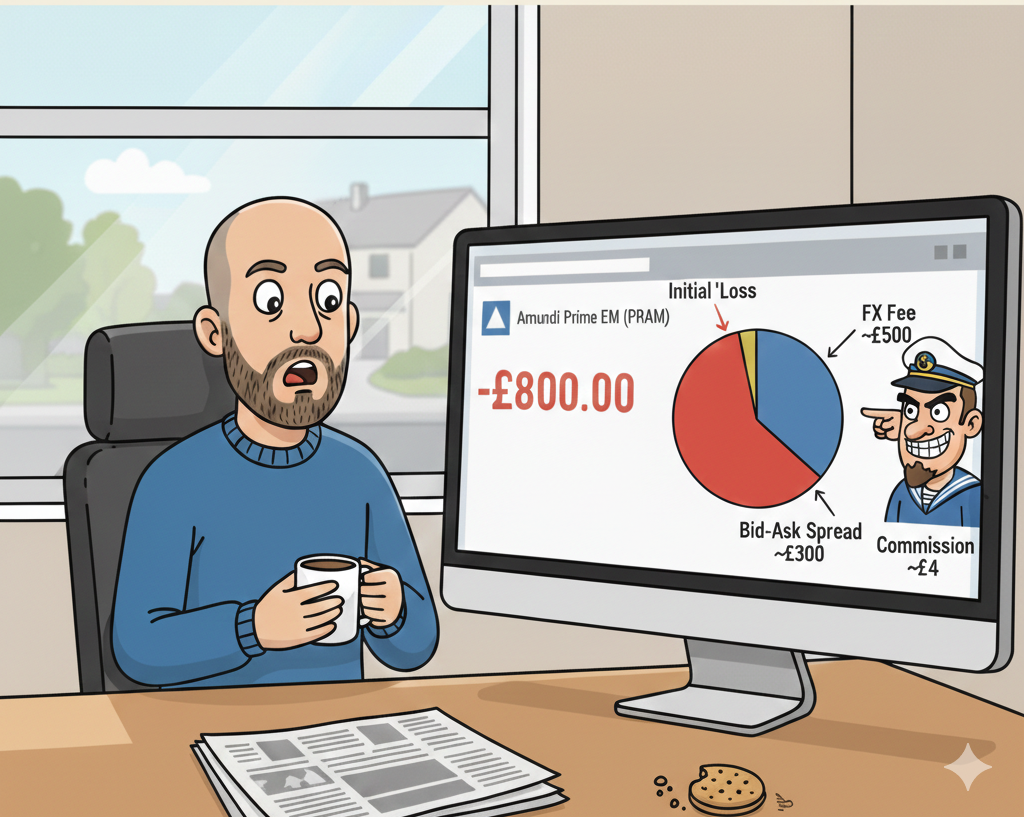
This is the big one. Imagine you're a UK investor who bought the ticker PRAM (the US Dollar version of the Amundi Prime EM fund) instead of PRAN (the British Pound version), using GBP cash. The broker instantly triggers a foreign exchange conversion fee of up to 0.75% on the trade. On a £100k trade, that's £500 gone in seconds—straight into the broker's yacht fund.
For Aussies buying US stocks, the trap is exactly the same. If you are using the wrong broker, you might be paying up to 1% in FX fees every time you buy or sell. If you're looking for the best broker for US shares Australia has to offer, you need to look past "zero commission" marketing and check the exchange rate spread. Often, the "free" brokers are the ones charging you the most on currency conversions.
2. The Bid-Ask Spread
Even if you dodge FX fees by using the correct currency ticker, you will always face the bid-ask spread. Think of this like a dodgy currency exchange booth at the airport. They sell you USD at one rate, but buy it back at a much worse rate. Shares work the same way. Your portfolio dashboard usually shows your value at the "Bid" price (what you'd get if you sold right now), but you bought at the "Ask" price (the higher price to buy). If you invest in niche or emerging markets, this spread can be wider, making your portfolio look like it lost money instantly.
3. Entry Commissions
Finally, your broker will tack on standard transaction commissions and immediately count those as part of your paper loss. It's like buying a new car and realizing it's worth 10% less the moment you drive it off the dealership forecourt.
How to avoid the "Insta-Loss" next time:
- Always match the currency ticker: If you are buying a fund that trades in multiple currencies, always purchase the version that matches your account's base currency.
- Hold a USD cash wallet: The cheapest way to buy US ETFs is to use a broker that lets you hold a USD balance. You convert your AUD once, and then buy and sell within that USD wallet without paying a conversion fee on every single transaction.
- Pick a low-FX broker: Platforms like Interactive Brokers charge virtually nothing for currency conversion (often around 0.002%), making them a favorite for serious international traders.
For more strategies on how to beat these hidden costs, read Monevator's detailed breakdown on FX fees on investments and how to crush them.
The Moral of the Story: In investing, the boring details like tickers and currency wallets are where real wealth is saved. Check your tickers twice and your broker's FX rates three times!